
Tsukemono: Learn All About Japanese Pickles!

A Brief History of Tsukemono
Tsukemono dates back over 1,000 years. It was originally developed as a way to preserve seasonal vegetables before refrigeration.
Using salt, rice bran, miso, vinegar, and even sake lees, Japanese households crafted pickles that sustained families through winter and brought a burst of flavour to everyday meals.
Over time, tsukemono evolved from a simple preservation method into a cultural staple. You’ll find them in traditional washoku cuisine, at celebratory meals, inside bento boxes, and even accompanying formal kaiseki dining.
Each region of Japan has its own style, its own vegetables of choice, and its own stories woven into every crisp bite.
Yet, despite this rich heritage, tsukemono have always remained delightfully accessible as a tradition built on everyday ingredients, transformed by seasoning and vinegar.
Why Use Tsukemono?

In Japan, tsukemono aren’t just a side dish. They’re a balancing act, used as a way to refresh the palate between bites, enhance umami, and introduce brightness to rich or savoury dishes.
They offer:
- Contrast: the vinegar tang cuts through deep, bold flavours
- Colour: the ingredients are bright, adding vibrancy and visual appeal
- Texture: the pickling process helps to enhance crispness in the ingredients, which juxtaposes soft grains like rice and proteins like fish wonderfully
- Harmony: the subtle acidity can tie a plate together like nothing else
What’s more, tsukemono embodies the Japanese principle of shun, which celebrates ingredients at their peak and honours their natural character.
How Are Tsukemono Used In Modern Kitchens?
Modern chefs love tsukemono because they fit beautifully into fast-paced kitchens. Unlike long-fermented pickles, many popular tsukemono styles can be made in minutes or hours, not days.
These quick pickles allow chefs to:
- Add instant freshness to starters and sides
- Build complexity with minimal prep
- Reduce waste by transforming surplus vegetables
- Introduce Japanese flavour with simplicity and consistency
And now, Mizkan is making this process even easier…
Creating Tsukemono With Mizkan Pickling Liquid
At Mizkan, vinegar has been at the heart of our craft for more than 200 years. From traditional rice vinegars to innovative flavour solutions for professional kitchens, we’ve always been passionate about helping chefs bring the essence of Japanese cuisine to life.
Our new Mizkan Pickling Liquid continues that legacy.
It has been designed by the experts at Mizkan to help chefs prepare authentic tsukemono with speed, ease, and consistency.
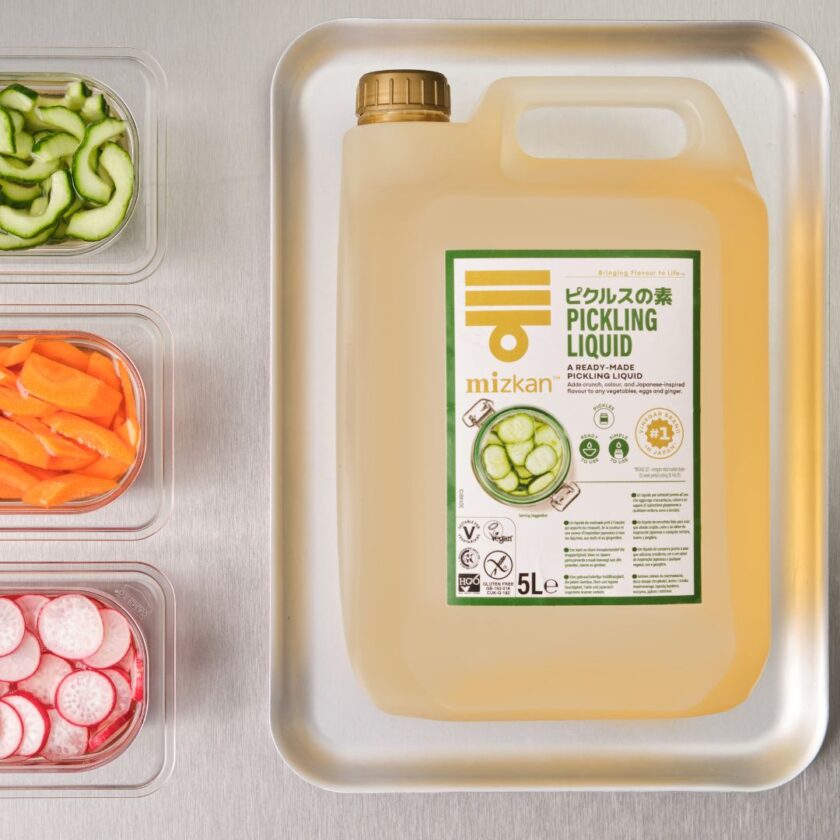
Why Chefs Love To Use Mizkan Pickling For Tsukemono:
- It’s ready to use: No measuring, no mixing. All you have to do is pour!
- Perfectly balanced: Created by Mizkan’s experts, it has a carefully-measured balance of acidity and sweetness that’s ideal for tsukemono.
- Ideal for vegetables, eggs, and more: Mizkan Pickling has been designed for versatility, which means it can be used to make any of your favourite types of tsukemono.
- Consistent flavour, every time: There is no need for chefs to measure salt and sugar with vinegar themselves, Mizkan has done that for them so you can pour with consistency.
- Gluten-free, Vegan, Halal and Kosher certified
With Mizkan Pickling Liquid, all you have to do is pour, pickle, and enjoy. Within minutes, your vegetables take on the bright, refreshing character that defines Japanese pickles.
How To Make Tsukemono At Home:

For chefs who prefer to craft their own pickling blends or experiment with custom seasonings at home, Mizkan Rice Vinegar is the perfect foundation.
With its mild acidity and delicate sweetness, Mizkan Rice Vinegar brings unmistakable Japanese authenticity to any pickle.
Many traditional tsukemono styles begin with rice vinegar, making Mizkan Rice Vinegar a natural choice for homecooks who want a more personalised approach to quick pickling. All you have to do is add salt and sugar, to taste, and pour over chopped vegetables.