
What Is Unagi Sauce?
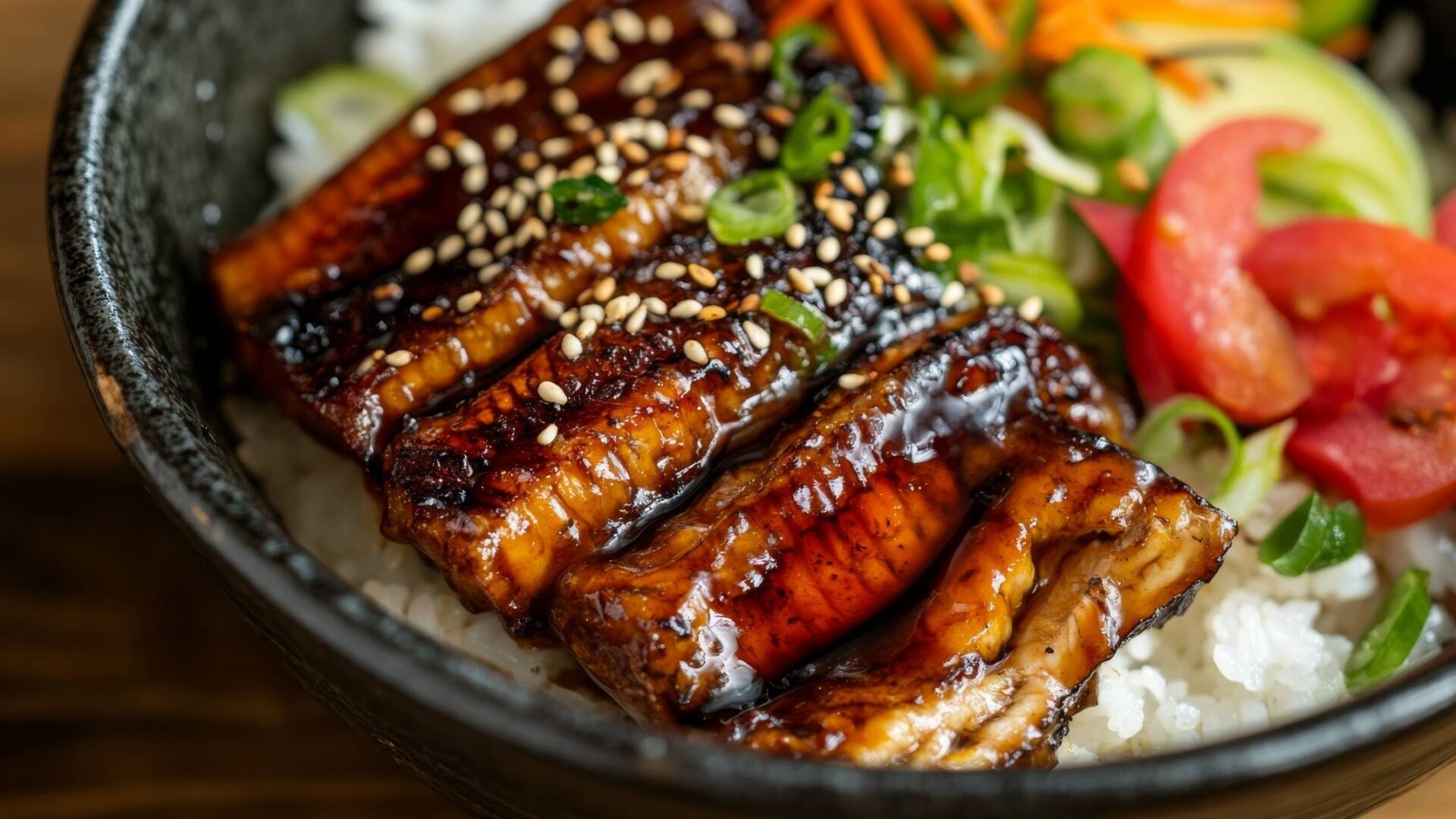
What Is Unagi?
Before we talk about the sauce, let’s begin with the word “unagi”.
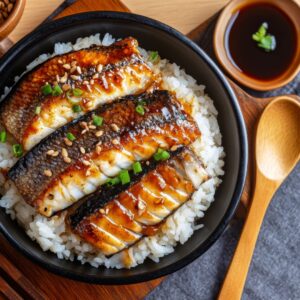
Unagi is the Japanese word for freshwater eel, a delicacy in Japanese cuisine known for its rich flavour and tender texture. Traditionally, unagi is grilled over charcoal and served with rice in a dish called unadon or unaju.
What makes unagi truly unforgettable, however, is the glaze brushed over it as it cooks, and that’s where unagi sauce comes in.
What Is Unagi Sauce?
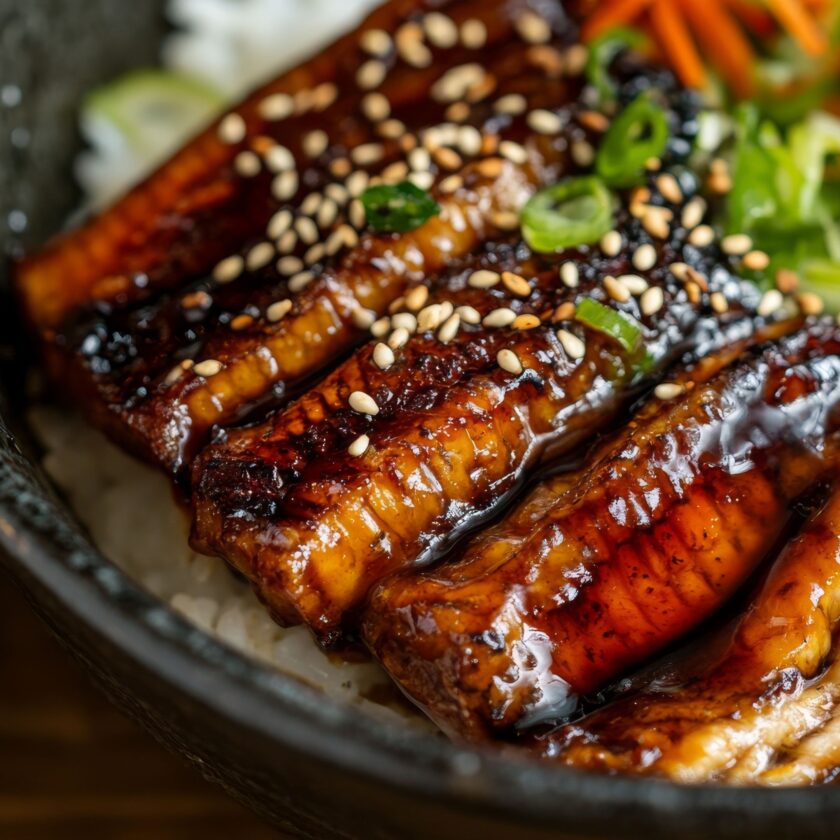
Unagi sauce (sometimes called eel sauce or nitsume) is a thick, sweet, and savoury glaze used to coat grilled eel and enhance sushi dishes.
At its heart, unagi sauce is all about balancing three key attributes:
- Sweetness
- Umami depth
- A glossy, caramelised finish
It’s this combination that gives unagi its signature flavour, which is known for being rich, comforting, and deeply satisfying.
What Is Unagi Sauce Made From?
Traditionally, unagi sauce is made by simmering a few simple ingredients until thick and syrupy:
- Soy sauce is used for its saltiness and umami
- Sugar is added for sweetness and caramelisation
- Mirin, a sweet Japanese low-alcohol rice wine, adds depth
- Sake, an optional extra, can then add even more aroma and complexity
The mixture is gently reduced over time, creating a glaze that clings beautifully to grilled foods.
While traditional methods can take time, today there are easier ways to enjoy this flavour.
Enter, Mizkan Sushi/Unagi Sauce…
Mizkan Sushi/Unagi Sauce
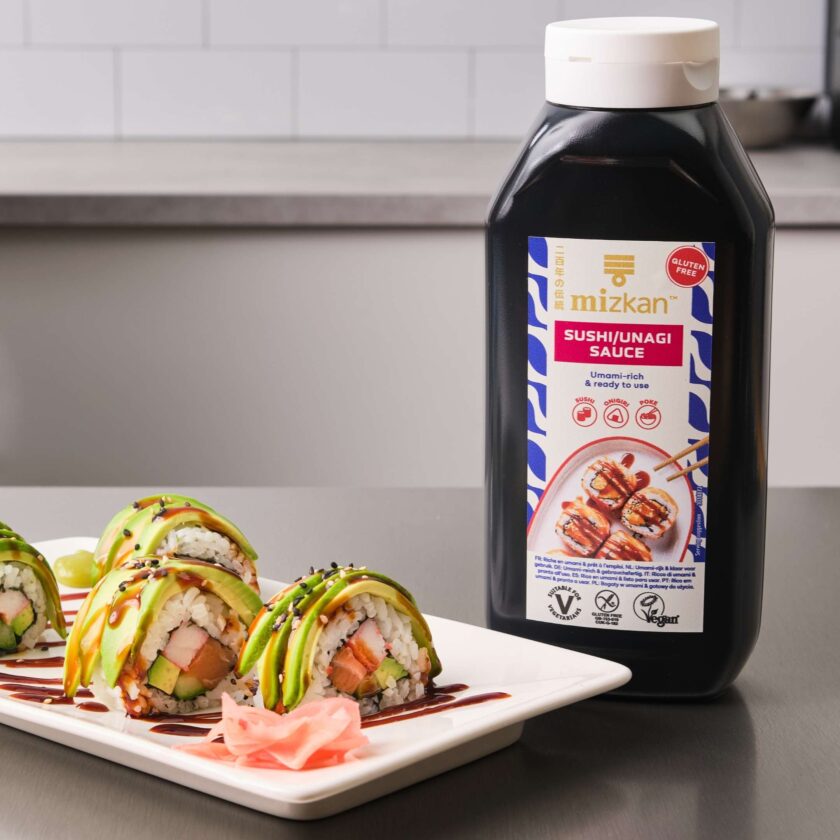
Creating authentic Japanese flavours shouldn’t be complicated, even in restaurants.
That’s why Mizkan’s Sushi/Unagi Sauce has been crafted to help professional kitchens deliver that same rich, balanced taste, without the need for long simmering or specialist ingredients.
Whether glazing grilled eel, finishing sushi rolls, or experimenting with new dishes, it’s a simple way to bring authentic flavour into your kitchen.
Find out more about Mizkan Sushi/Unagi Sauce here: https://foodservice.mizkankitchen.co.uk/products/sushi-unagi-sauce/
How to Use Unagi Sauce
Unagi sauce is wonderfully versatile. It can be used in lots of ways far beyond simply glazing eel.
Here are some delicious ways to use it:
1. Drizzle Over Sushi
Add a glossy finish to:
- Dragon rolls
- Spider rolls
- Avocado or cucumber rolls
Just a light drizzle transforms both flavour and presentation.
2. Glaze Grilled Dishes
Brush onto:
- Grilled fish (especially salmon)
- Chicken skewers
- Aubergine or tofu
The sauce caramelises beautifully under heat, giving your dish a glossy, caramelised finish that looks as good as it tastes.
3. Elevate Rice Bowls
Stir into rice or drizzle over bowls for an instant umami boost.
Try drizzling unagi sauce over a bowl of rice and placing thick pork katsu over the top for a tasty dinner.
4. Use as a Dip or Dressing
Try it as:
- A dipping sauce for dumplings
- A drizzle for poke bowls
- A finishing touch for roasted vegetables
Unagi Sauce vs Teriyaki Sauce
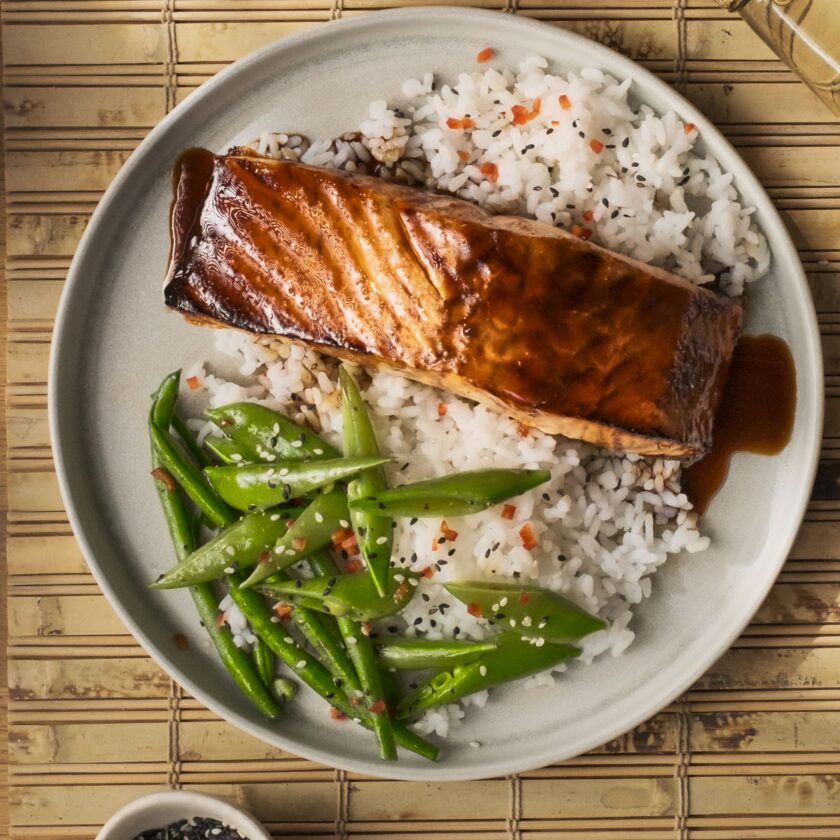
What’s the difference between unagi sauce and teriyaki sauce? It’s a common question, and an important one.
While both sauces share similar ingredients, they’re not quite the same. Here are some of their key differences:
- Unagi is thick and syrupy while teriyaki sauce is lighter and more fluid.
- Unagi sauce is sweeter and richer in flavour, whereas teriyaki has a more balanced sweet-salty profile.
- Unagi sauce is mainly used for finishing glazes. Teriyaki is often used as a marinade as well as a sauce.
- Unagi sauce is most often associated specifically with eel dishes and sushi. Teriyaki sauce is used more widely across Japanese cuisine.
In short, the main differences between unagi sauce and teriyaki sauce are in texture, flavour, and usage.
Bringing Japanese Flavour Home
Understanding what unagi sauce is opens up a whole new world of cooking possibilities.
From sushi nights to quick midweek meals, this sweet and savoury glaze brings warmth, richness, and a touch of Japanese tradition to every dish.
If you’re ready to start experimenting, keep things simple, joyful, and delicious – just as Japanese cooking is meant to be.And if you would like to try making your own unagi sauce at home, this recipe is a great place to start…
How to make Unagi Sauce at home:
120ml soy sauce
120ml Mizkan Mirin-Style Sweet Seasoning
120g granulated sugar
50ml sake (optional)
Add all of the ingredients to a sauce pan on medium heat. Stir to dissolve the sugar. Turn up the heat to medium-high and simmer until the sauce has reduced by one third. When the sauce coats the back of a spoon, take it off the heat and leave to cool.
Serve over sushi, grilled eel, or a rice bowl and enjoy!